
Bioenergy Deep Dive: Securing Feedstock and Generating Dispatchable Power
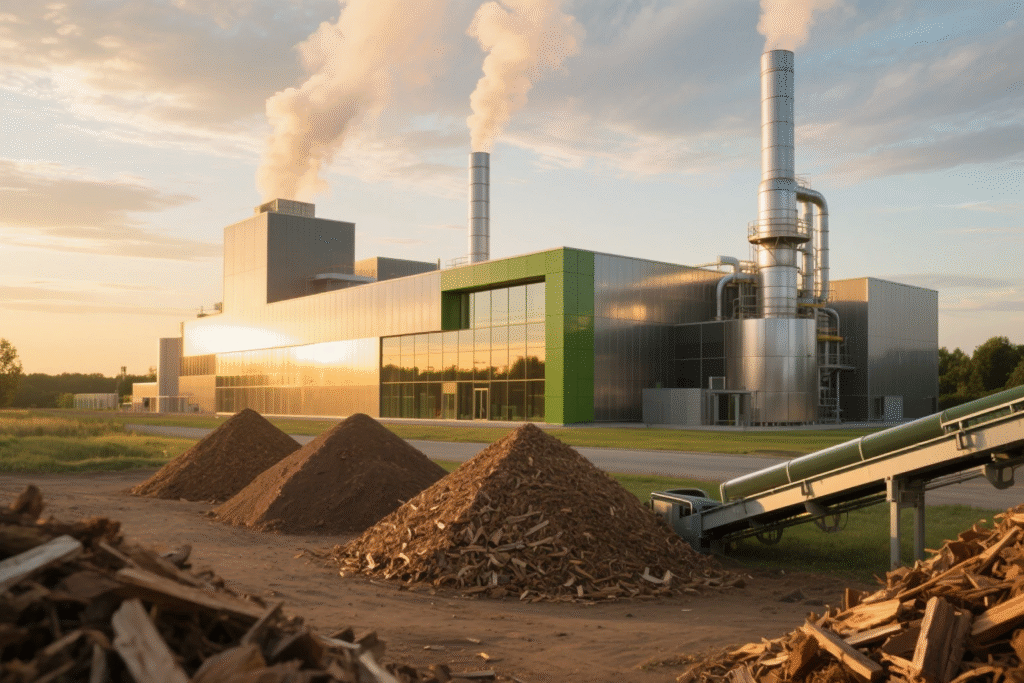
Bioenergy—covering both biomass and biogas—serves as a vital pillar of Malaysia’s National Energy Transition Roadmap (NETR). Moreover, unlike solar or wind, bioenergy delivers dispatchable power. In other words, it can reliably generate electricity whenever it is required. Consequently, it plays a crucial role in balancing the grid and supporting energy security as Malaysia gradually phases out fossil fuels.
For investors, the commercial success of any bioenergy project hinges on mastering two primary challenges: feedstock security and navigating the Feed-in Tariff (FiT) framework.
1. Commercial Models: Mastering Feedstock Security
Malaysia possesses a massive, geographically concentrated supply of biomass, primarily derived from the Palm Oil Milling (POM) industry. The most common feedstocks are:
| Feedstock | Source | Bioenergy Application | Critical Challenge |
|---|---|---|---|
| Palm Kernel Shell (PKS) | Palm Oil Mill waste | High-value biomass for co-firing or export. | Price volatility and competition with international buyers (Japan, Korea). |
| Empty Fruit Bunch (EFB) | Palm Oil Mill waste | Lower-value biomass, often used for centralized power plants. | High moisture content requires pre-treatment (drying) before combustion. |
| Palm Oil Mill Effluent (POME) | Wastewater from milling process | Used to produce biogas (mostly methane) via anaerobic digestion. | Requires proximity to the source and significant initial capex for digesters. |
For large industrial heat users, Bioenergy can supply green steam; however, CCUS continues to represent the most scalable pathway for achieving absolute emissions reduction.
The Feedstock Supply Contract (FSC)
The most critical factor in bankability is the Feedstock Supply Contract (FSC). A robust bioenergy project must secure long-term (15-20 year) FSCs with multiple suppliers to mitigate risk. Key considerations include:
Volume & Quality:
Contracts must specify minimum annual delivery volumes as well as key quality metrics, such as the maximum moisture content allowed for EFB.
Pricing Mechanism:
To reduce the risk of commodity price swings—especially for PKS—pricing mechanisms often set both a floor and ceiling price. Alternatively, they may apply a sliding scale that is linked to the consumer price index (CPI).
Logistics:
The location of the plant must minimize the transportation distance, as high transport costs can quickly erode margins. A radius of $50\mathrm{km}$ from the mill is often considered the maximum feasible distance.
2. Market Mechanism: The Feed-in Tariff (FiT) Scheme
Bioenergy remains heavily reliant on the Feed-in Tariff (FiT) mechanism, administered by the Sustainable Energy Development Authority (SEDA). FiT provides a guaranteed price for every kilowatt-hour ($\mathrm{kWh}$) of electricity generated and injected into the grid over a fixed term (typically 16-21 years).
FiT Structure and Incentive Layers
The final tariff price for a bioenergy project is calculated using a Base Tariff plus various Bonus Rates designed to incentivize specific technologies and locations:
| Bonus Rate | Description | Purpose of Incentive |
|---|---|---|
| Plant Factor | Higher rate for plants with high operational uptime (e.g., >80% capacity factor). | Encourages dispatchable generation and maximum utilization of the asset. |
| High Efficiency | Additional rate for power plants demonstrating superior thermal efficiency. | Incentivizes advanced boiler and turbine technology, reducing fuel consumption. |
| Local Content | Rewards projects that utilize locally manufactured components or services. | Supports the local supply chain and domestic job creation. |
| Geo-Location | Higher rates for projects located in remote areas or where grid stability is critical. | Promotes decentralized power generation in underserved areas. |
FiT Quota Management
Investors must monitor SEDA’s annual and quarterly FiT quota allocations. Once the quota for a specific bioenergy type (such as biomass or biogas) is fully taken up for the year, no new projects can receive a FiT until the next allocation cycle. As a result, competition for available slots becomes intense and time-limited.
3. The Future: Co-firing and Sustainable Aviation Fuel (SAF)
The NETR is rapidly shifting the focus of bioenergy beyond electricity generation:
Co-firing in Coal Plants:
Large-scale coal power plants are exploring the co-firing of processed biomass (like wood pellets or PKS) with coal. This is a crucial early step for decarbonization, allowing existing infrastructure to achieve immediate emissions reduction with minimal capital expenditure.
Sustainable Fuels:
The higher-value market for Sustainable Aviation Fuel (SAF) and marine bio-fuels is emerging. Bio-oil derived from palm-based materials can be processed into these advanced fuels. Evethought, requiring much higher technology investment, this path offers access to global, premium-priced markets, potentially offering returns far exceeding those from simple electricity generation.
Conclusion
Bioenergy stands out as a solution that addresses waste management while also delivering resilient, controllable power. As a result, it plays a crucial and necessary role in Malaysia’s energy transition.
Essential Policy & Finance Resources
Accelerate Your Energy Transition Strategy
Successfully navigating Malaysia’s energy market requires deep compliance and strategic foresight. For comprehensive guidance on financing and policy, explore our essential resources:
- Download the National Energy Transition Roadmap (NETR) Commercialization Guide
- Understand GTFS Project Finance and Compliance in Malaysia
Let us Find You contacts of
Awarded EPCC, Consultants, Application Contractors
FREQUENTLY ASKED QUESTIONS
Unlike intermittent sources (solar/wind), bioenergy plants (biomass combustion or biogas engines) can store their fuel (feedstock) and generate electricity on demand. This ability allows them to provide consistent baseload power or ramp up production to stabilize the grid as needed, playing a crucial role in energy security.
The main risk is price volatility and intense competition. PKS is a high-value commodity often sought by international buyers (e.g., Japan and Korea) for co-firing, which can drive up local procurement costs for domestic projects.
Transportation costs severely erode margins in bioenergy projects. A 50km radius is generally considered the maximum feasible distance from the feedstock source to the plant to ensure that the cost of hauling the raw material does not outweigh the energy value derived, especially for lower-density feedstock like EFB.
The Feed-in Tariff (FiT) mechanism includes a Plant Factor Bonus Rate. This offers a higher per-kWh price to plants that demonstrate high operational uptime (e.g., above 80% capacity factor), directly rewarding reliable, dispatchable generation and maximum asset utilization.
EFB (Empty Fruit Bunch) requires FSCs focused on securing high volume, long-term stability (15-20 years), and quality (low moisture content). POME (Palm Oil Mill Effluent) often involves securing land rights and managing the significant initial capital expenditure (capex) for the anaerobic digesters, making it more of a site-specific infrastructure and wastewater management contract.
The NETR is pushing bioenergy into higher-value decarbonization pathways. This includes co-firing processed biomass with coal in existing power plants for immediate emissions reduction and, more significantly, the production of premium-priced Sustainable Aviation Fuel (SAF) and marine biofuels for global markets.
Related Technical Deep Dives
BESS for Revenue Stacking and Grid Stability in Malaysia’s Energy Transition
Data centres: Opportunities in Malaysia’s Green Digital Hub
Hyperscale Data centres for M&E consultants
Bioenergy Deep Dive: Securing Feedstock and Generating Dispatchable Power
Bioenergy and Waste-To-Energy for M&E consultants
CCUS & CO₂ Storage Hub Malaysia: Investment, Tax Incentives
Hydrogen Infrastructure and Supply Chain Opportunities in Malaysia
Solar LSS : The Financial Landscape of Commercial & Industrial in Malaysia