
BESS Deep Dive: Revenue Stacking and Grid Stability in Malaysia’s Energy Transition
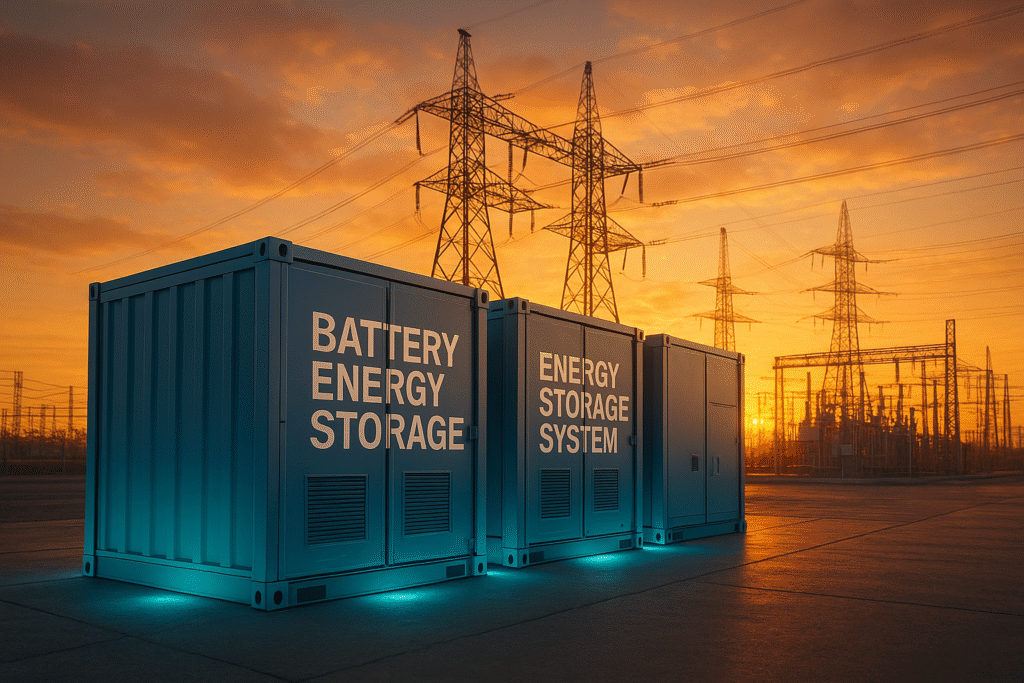
Battery Energy Storage Systems (BESS) are no longer a luxury—they are a foundational component of Malaysia’s modernizing electrical grid. With the rapid deployment of intermittent solar and future wind capacity under the National Energy Transition Roadmap (NETR), BESS provides the critical flexibility required for system security and peak shaving.
For developers and investors
The commercial opportunity lies in mastering Revenue Stacking models and navigating stringent technology and safety standards.
1. Commercial Imperative: The Shift to Revenue Stacking
Unlike traditional power plants that rely on a single energy payment, the commercial viability of BESS assets in the Malaysian market depends on generating income from multiple sources simultaneously. As a result, this approach is known as Revenue Stacking.
Core Revenue Streams (The Stack)
A fixed fee is paid by the grid operator (TNB) to the BESS owner for making a guaranteed amount of power capacity available to the system, even if it is not used. Consequently, this payment strengthens the financial model and lowers the Weighted Average Cost of Capital (WACC).
Capacity Payment (The Base):
Ancillary Services (The Premium):
The most profitable stream, involving ultra-fast, high-value services to maintain grid stability. These services include:
Frequency Containment Reserve (FCR):
Rapid injection or absorption of power within seconds to keep the grid frequency within tight tolerances.
Frequency Restoration Reserve (FRR):
Sustained response to restore the frequency back to its nominal level.
Energy Arbitrage (The Market Play):
The BESS unit acts as a sophisticated energy trader, automatically:
- During periods of low electricity prices—for example, during peak solar generation at midday—BESS units typically charge to absorb excess renewable energy.
- Conversely, BESS units discharge during high-demand, high-tariff peak hours—typically in the evenings—in order to capture the price differential.
Technology Requirement: The Role of the PCS
Moreover, the ability to stack revenue streams largely depends on the performance of the Power Conversion System (PCS) and the Energy Management System (EMS). In particular, the PCS must switch almost instantaneously between charging, discharging, and providing frequency response without latency, as required by TNB’s System Operator (TNB SO).
Let us Find You contacts of
Awarded EPCC, Consultants, Application Contractors
2. Technology and Safety: Mitigating Risk in High-Temperature Environments
Malaysia’s high ambient temperature (30° Celsius to 35° Celsius) presents significant thermal challenges for lithium-ion (Li-ion) batteries. Poor thermal management leads to rapid degradation, reducing battery life and energy capacity, and increasing the risk of thermal runaway (fire).
Key Technology Solutions
| Challenge | Impact on Project OPEX/Safety | Required Technology & Engineering |
|---|---|---|
| High Ambient Heat | Reduces system life; increases HVAC energy consumption (OPEX). | Liquid Cooling Systems: Superior to air cooling for maintaining the optimal operating temperature of 20°C to 30°C of the cells with higher efficiency. |
| Thermal Runaway Risk | Catastrophic fire risk; high insurance premiums. | NFPA 855 Compliance: Mandatory use of specialized fire prevention: Off-Gas Detection (early chemical warning) and Deflagration Vents (pressure release). |
| Cell Degradation | Lost capacity over time; reduced revenue and shorter PPA life. | Advanced Battery Management Systems (BMS): Sophisticated, cell-level control software that ensures uniform state-of-charge and temperature management across all modules. |
The Certification Hurdle
Therefore, projects seeking financing must demonstrate compliance with international standards, including the IEC 62933 series (for performance and safety) and NFPA 855 (for installation and fire safety). By meeting these standards, they ensure both bankability and acceptance by insurers.”
3. Policy and Commercial Roadmap
Although BESS development is considered a high priority, the regulatory framework is still evolving. Consequently, developers must carefully navigate regulatory requirements during project planning.
TNB’s Role:
TNB is driving the initial wave of BESS deployment, primarily to serve grid stability (frequency and voltage support). This provides guaranteed anchor customers for the first phase of BESS market development.
Stand-alone vs. Co-located:
Initially, most projects were stand-alone assets, such as grid-connected BESS that were dedicated exclusively to grid services. However, the trend is now shifting toward co-located BESS paired with LSS solar farms to increase the firm capacity of renewable generation. Furthermore, co-located BESS simplifies interconnection and maximizes revenue from a single site.
The BESS market represents a highly technical, yet highly lucrative, investment avenue tied directly to Malaysia’s success in meeting its NETR goals.
Wholesale Electricity Market (WEM)
The eventual transition to a WEM will fully enable energy arbitrage and complex trading
BESS monetization/application.
Unlocking the full commercial potential of BESS beyond grid contracts. Investors must select BESS technology and PCS that are WEM-compatible from day one.
Essential Policy & Finance Resources
Accelerate Your Energy Transition Strategy
Successfully navigating Malaysia’s energy market requires deep compliance and strategic foresight. For comprehensive guidance on financing and policy, explore our essential resources:
- Download the National Energy Transition Roadmap (NETR) Commercialization Guide
- Understand GTFS Project Finance and Compliance in Malaysia
BESS’s FREQUENTLY ASKED QUESTIONS
Many view BESS (Battery Energy Storage System) simply as a mechanism to store solar energy. While true, the real opportunity in Malaysia, specifically under the Enhanced Regulatory Certainty (E-RC) framework, lies in Revenue Stacking—generating multiple, simultaneous income streams.
Beyond selling stored energy back to the grid (arbitrage), BESS can generate revenue from:
Ancillary Services / Grid Stability: Selling services to TNB to stabilize the grid, such as Frequency Control. This provides a steady, contracted income stream.
Capacity Firming: Selling guaranteed dispatchable capacity on demand.
Peak Shaving: Discharging during peak tariff hours to significantly reduce utility bills for commercial and industrial users.
Machinelist assists ProjeScheme (GTFS).ct Developers and M&E Consultants in understanding the BESS specifications required for pre-qualification in these services, ensuring your long-term return on investment (ROI) is robust and bankable for financing under schemes like the Green Technology Financing
The timeline for achieving a positive return on investment (ROI) depends heavily on the project size and the chosen Revenue Stacking strategy.
Large-Scale Projects (>10MW): These typically involve long-term Power Purchase Agreements (PPA). ROI realization usually occurs within 5-8 years, offering stable, contractually backed returns. Critical phases like TNB Technical Approval and SEDA licensing can take between 9 to 18 months.
C&I Projects (Commercial & Industrial, <10MW): Smaller installations for factories or commercial complexes. ROI can be faster (4-6 years) driven primarily by self-consumption optimization and peak shaving.
For Project Developers and Application System Integrators: The main challenge is ensuring the quality and traceability of the equipment. TNB’s technical committee is rigorous. We guide you to equipment sellers who can provide the necessary traceability documentation to prevent costly delays during the Technical Approval phase.
Technical Approval from TNB is the most crucial hurdle. While TNB does not necessarily prohibit lesser-known brands, they are extremely strict regarding technical documentation (traceability) and compliance.
You must successfully demonstrate:
Certified Performance: The batteries and inverters must possess a verifiable track record and certified specifications (IEC/IEEE compliance).
Grid Code Compliance: The BESS system must be proven to operate in accordance with the Malaysia Grid Code (e.g., fault ride-through capability).
Safety & Traceability: Comprehensive C&S documentation for fire safety and thermal management (critical for LFP/NMC chemistries).
Machinelist’s Value: We match the specifications required by M&E/C&S Consultants with Equipment Sellers who can deliver complete, auditable documentation. Do not waste time procuring equipment that will ultimately fail the Technical Approval process
While Lithium-ion (particularly LFP) dominates the short-to-medium duration market, the Malaysian market is beginning to explore alternatives due to cost and long-duration storage requirements.
Redox Flow Batteries (RFB): Best suited for long duration storage (>4 hours). They have a higher upfront cost but offer a significantly longer lifespan and minimal degradation. They require a larger physical footprint.
Sodium-ion Batteries: A newer technology that promises lower cost and improved safety from a fire risk perspective compared to certain Lithium-ion chemistries. This could be a game changer for budget-conscious Project Developers in the future.
Tips for M&E/C&S Consultants: When designing a project, consider the true Levelized Cost of Storage (LCOS) over the entire life cycle, not just the initial capital expenditure. Longer storage durations often necessitate non-Lithium chemistries to achieve the best ROI.
BESS is recognized as a key enabler for achieving the ambitious targets set out in the National Energy Transition Roadmap (NETR). Without BESS, the grid cannot reliably integrate massive amounts of intermittent renewable energy (solar and wind).
Integration of RE: BESS stores excess renewable energy generated during the day and dispatches it during peak demand or at night, making RE dispatchable.
Carbon Reduction: By stabilizing the grid, TNB can reduce the reliance on high-carbon gas or diesel peaker plants for balancing.
Energy Security: Ensures constant electricity supply, mitigating risks associated with grid disturbances or weather-dependent RE generation.
This alignment provides Project Developers with the assurance that their BESS investments are fully supported by government policy and are eligible for financing mechanisms like the Green Technology Financing Scheme (GTFS).
BESS SOALAN LAZIM
Ramai orang fikir BESS (Battery Energy Storage System) ni untuk store solar je. Itu betul, tapi peluang sebenar di Malaysia di bawah program E-RC (Enhanced Regulatory Certainty) ialah Revenue Stacking—atau senang cerita, pelbagai sumber pendapatan serentak.
Selain dari jual balik tenaga yang disimpan (arbitrage), BESS boleh buat duit dari:
Grid Stability/Ancillary Services (Perkhidmatan Sampingan): Jual perkhidmatan kepada TNB untuk stabilise grid (contoh: Frequency Control). Ini steady punya income.
Capacity Firming: Jual kapasiti yang boleh dihantar on demand.
Peak Shaving (Pengurangan Puncak): BESS discharge masa peak hours untuk elak tarif tinggi.
Machinelist membantu Project Developers dan M&E Consultants faham spesifikasi BESS mana yang diiktiraf untuk semua perkhidmatan ini, supaya return on investment (ROI) anda lebih solid dan bankable.
Tempoh masa untuk nampak return (ROI) bergantung kepada saiz projek dan strategi Revenue Stacking.
Projek Besar (>10MW): Ini melibatkan PPA (Power Purchase Agreement) jangka panjang. ROI mungkin ambil masa 5-8 tahun, tetapi ia lebih terjamin sebab ada kontrak. Kelulusan TNB (Technical Approval) dan SEDA (License) adalah fasa yang paling kritikal dan boleh mengambil masa 9 hingga 18 bulan.
Projek C&I (Commercial & Industrial): Projek lebih kecil (<10MW) untuk kilang atau kompleks komersial. ROI boleh jadi lebih cepat (4-6 tahun) melalui self-consumption dan peak shaving.
Untuk Project Developers dan Application System Integrators: Cabaran utama ialah memastikan kualiti dan traceability peralatan. Jawatankuasa teknikal TNB sangat teliti. Kami guide anda cari equipment yang memenuhi kriteria traceability untuk elak delay di peringkat Technical Approval.
Ini soalan paling power. Technical Approval dari TNB adalah pintu utama. TNB tidak semestinya kata ‘tak boleh guna brand biasa’, tetapi mereka sangat strict tentang dokumentasi teknikal (traceability) dan compliance.
Anda mesti tunjukkan:
Certified Performance: Bateri dan Inverter mesti ada track record dan certified specs (IEC/IEEE compliance).
Grid Code Compliance: Sistem BESS perlu terbukti boleh beroperasi ikut Malaysia Grid Code (contohnya, dalam fault ride-through).
Safety & Traceability: Dokumen C&S yang lengkap untuk fire safety dan thermal management (penting untuk LFP/NMC batteries).
Machinelist’s Value: Kami match spesifikasi yang diperlukan oleh M&E/C&S Consultants dengan Equipment Sellers yang boleh sediakan documentation lengkap. Jangan waste masa beli equipment yang tak boleh dapat Technical Approval!
Walaupun Lithium-ion (terutamanya LFP) mendominasi, pasaran Malaysia mula tengok alternative disebabkan kos dan isu long-duration storage.
Redox Flow Batteries (RFB): Paling sesuai untuk long duration storage (>4 jam). Kos lebih tinggi pada mulanya, tapi lifespan lebih lama dan degradasi rendah. Space lebih besar diperlukan.
Sodium-ion Batteries: Teknologi baru yang lebih murah dan selamat dari segi fire risk berbanding Lithium-ion. Ini mungkin game changer untuk budget-conscious Project Developers di masa hadapan.
Tips untuk M&E/C&S Consultants: Bila design projek, pertimbangkan kos sebenar over the entire life cycle (LCOS), bukan kos awal sahaja. Longer duration mungkin perlukan non-Lithium untuk dapat ROI terbaik.
BESS adalah key enabler untuk NETR (National Energy Transition Roadmap). Tanpa BESS, kita tak boleh masukkan banyak solar dan angin dalam grid.
Integration of RE: BESS simpan tenaga berlebihan dari solar pada waktu siang dan lepaskan waktu malam (menjadikan RE dispatchable).
Carbon Reduction: Dengan stabilise grid, TNB boleh kurangkan penggunaan peaker plants (biasanya guna gas/diesel) yang high carbon.
Energy Security: Memastikan bekalan elektrik sentiasa ada, walaupun ada gangguan atau solar tak ada.
Ini memberi jaminan kepada Project Developers bahawa pelaburan BESS mereka adalah selari dengan hala tuju kerajaan dan GTFS (Green Technology Financing Scheme).
Related Technical Deep Dives
BESS Deep Dive for Investors & Developers
Data centres: Opportunities in Malaysia’s Green Digital Hub
Hyperscale Data centres for M&E consultants
Bioenergy Deep Dive: Securing Feedstock and Generating Dispatchable Power
Bioenergy and Waste-To-Energy for M&E consultants
CCUS & CO₂ Storage Hub Malaysia: Investment, Tax Incentives
Hydrogen Infrastructure and Supply Chain Opportunities in Malaysia
Solar LSS : The Financial Landscape of Commercial & Industrial in Malaysia